PA PAC Awards Over $500k to Fuel Implementation of Maternal Health Strategic Plan
Type: News
Focus Area: Women’s Health
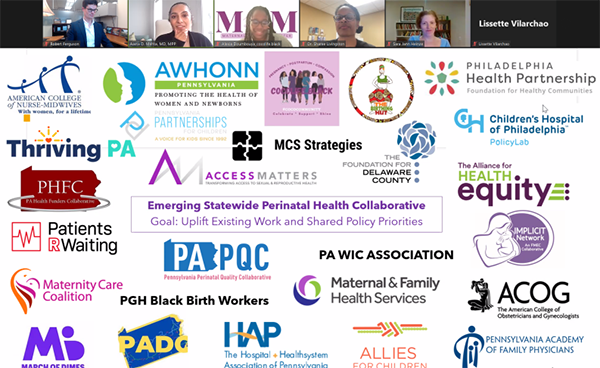
Launched in April 2025, the Pennsylvania Perinatal Action Collaborative (PAC) is a multi-disciplinary group dedicated to advancing maternal health initiatives throughout the state. The PAC is tasked with executing the Maternal Health Strategic Plan (MHSP), which seeks to improve the health outcomes of pregnant and postpartum individuals in Pennsylvania.
To effectively implement the MHSP, the PAC consists of priority teams focused on five key areas: increasing access to high-quality care, supporting behavioral health and substance use disorder needs, improving rural health and maternity care deserts, addressing health-related social needs and expanding and diversifying the healthcare workforce. Over the course of 2025, PAC members met within these priority teams to create actionable strategies to implement a recommendation from each area of the MHSP. In response, two funding opportunities for implementation grants were made available, the first in October 2025 and the second in January 2026. The implementation awardees below from the first round were awarded nearly $600,000 in February 2026. Stay tuned this spring when the second round of awardees are announced.
Increasing Access to High-Quality Care
Increased utilization of non-medical supportive services, such as community health workers, peer services, and doulas, can help support greater cultural competency in perinatal care and improve health outcomes. PAC members recommended that additional resources be provided to organizations to continue or expand their non-medical support services offered in a community or medical setting. Two grantees were selected in this category, Franklin Pediatrics and Fabric Health.
Franklin Pediatrics, in Venango County, was awarded $150,000 to provide services to postpartum individuals at their child’s pediatrician visit. Venango county is a rural area where residents face challenges, along with many counties in northwest Pennsylvania, in accessing maternity care. Many postpartum individuals attend their infant’s pediatric visits, even when they do not have access to postpartum care. This uniquely positions a pediatrician’s office to fill gaps in postpartum care. With this funding Franklin Pediatrics will expand its services, including lactation supports, postpartum mental health and wellness circles, and social care navigation that includes screening and warm handoff to resources for food, housing, and Pennsylvania Special Supplemental Nutrition Program for Women, Infants and Children (WIC).
Fabric Health was awarded $150,000 to address barriers to accessing and supporting prenatal and postpartum care. Fabric Health works with mothers and families at laundromats, turning a weekly chore into an opportunity to solve urgent needs. Their navigators provide pregnant and postpartum individuals with resources to address food insecurity, utility insecurity, access to transportation, and insurance coverage, among other pressing needs. The organization has a growing demand for their services, and this funding will help address this need with a focus on Allegheny and Philadelphia counties. Both counties experience disparities in maternal health and have increasing rates of severe maternal morbidities.
Improving Rural Health and Maternity Care Deserts
To address the lack of maternal care in rural areas and maternity care deserts in Pennsylvania, the MHSP recommends leveraging existing groups, venues and resources. PAC members advised that support should be provided to existing mobile or pop-up clinics, pharmacies, or virtual care to expand access to maternal care.
University of Pittsburgh School of Pharmacy was awarded $149,897 to expand access to maternal health services within pharmacies in rural counties and maternal health deserts. The School of Pharmacy provides program evaluation and implementation support for the Pennsylvania Pharmacists Care Network (PPCN). PPCN is a statewide clinically integrated network of nearly 200 community pharmacies in 48 counties across Pennsylvania that provide enhanced patient care services. In May 2025, the PPCN launched a pharmacy-based maternal health program which provides pregnant and postpartum individuals with blood pressure screenings, safe medication guidance, social needs assessments, and prenatal nutrition advice. The program also connects them to additional services, including doulas, postpartum behavioral health support, diaper and milk banks, and home-visiting programs. These funds will expand the implementation support of the pharmacy-based maternal health program to an additional eight pharmacies serving counties with moderate, low, or no access to maternal healthcare access with a focus on Greene, Mercer, Venango, Clarion, and Clearfield counties.
Supporting Behavioral Health and Substance Use Disorder Needs
Mental health conditions, including substance use disorder, are the leading cause of maternal mortality in Pennsylvania. To improve mental health screenings and referrals for pregnant and postpartum individuals, members of the PAC agreed that an easily accessible website or app for individuals to take a screening and then be referred to appropriate resources and treatment would help address this need.
Phia Health was awarded $150,000 to support a statewide initiative to deploy a behavioral health platform that supports pregnant and postpartum individuals across Pennsylvania. The platform provides evidence-based perinatal mental health screenings, continuous risk detection, and rapid escalation to licensed clinicians and care coordinators. Phia partners with OB practices, health systems, employers, and Medicaid MCOs to close critical care gaps and support families through the most vulnerable period of their lives. The initial phase of the initiative will focus on select urban and rural counties, with plans to go statewide. The Phia Health platform provides evidence-based perinatal mental health screenings with rapid escalation to licensed clinicians and care coordinators when needed. This approach proactively identifies behavioral health risks and ensures connection to treatment.
These organizations have been awarded funds as part of the Perinatal Action Collaborative’s (PAC) Implementation Grants through the federal Maternal Health Innovation Program. These funds were provided through the Pennsylvania Department of Health. The PAC is facilitated by the Jewish Healthcare Foundation and supported by the Pennsylvania Department of Health.